Centuries of craft, refined for the modern wardrobe

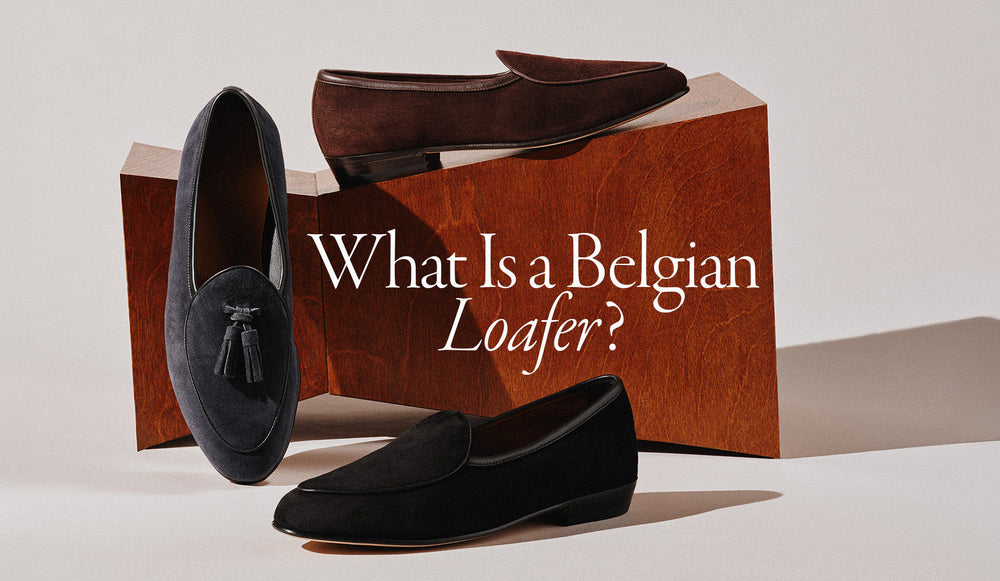
What Is a Belgian Loafer?
A Belgian loafer is a slip-on dress shoe defined by a few things: a soft, unlined upper that moulds to the foot, and the stitch-and-turn method of construction, in which the shoe is sewn inside out and then turned so every seam is hidden within. The silhouette draws on a centuries-old tradition of handmade cobbling from the Belgian countryside, and is widely considered the most elegant and most comfortable expression of the loafer.
The craft of making one
Most dress shoes are constructed right-side out. The upper is shaped over a wooden last, the seams are sewn from the outside, and the sole is attached beneath. A Belgian loafer is made the other way around.
The upper is cut and assembled inside out. Every seam is sewn from what will eventually become the inside of the shoe. Once the stitching is complete, the upper is turned, pulled by hand right side out, so that all the seams sit hidden against the foot. The result is an exterior that appears almost seamless: a continuous plane of leather or suede, broken only by the vamp.

Three things follow from this method, and they are inseparable from the character of the shoe.
The first is suppleness. With no external seams to provide structure, the upper has nothing to resist against. The leather follows the anatomy of the foot rather than imposing a shape on it. This is the source of the famously glove-like fit, and the reason a Belgian loafer is sometimes mistaken, at first glance, for a slipper.
The second is silence. The stitch-and-turn method produces a shoe that looks designed rather than constructed. There are no visible seams, no external stitching to draw the eye. The silhouette reads as a single, considered line. This is what gives the style its dress-shoe formality despite its softer construction.
The third is craft. The method does not lend itself to industrial production. Each pair must be sewn, turned, and finished by hand, and the turning step in particular is a craftsmanship test: done poorly, it deforms the upper; done well, it produces a shoe of extraordinary smoothness. The number of Italian Ateliers in the world capable of this work, at a standard worth wearing, is small. Baudoin & Lange's ateliers are one of the only ones in the world truly capable of this standard of making.
What makes a Belgian loafer special
The Belgian loafer is loved for a quieter reason than its technical features. It is the dress shoe that asks the least of the wearer. There is no breaking-in period. There is no stiffness to negotiate over the first months of wear. The shoe is comfortable the moment it goes on, and remains so through a working day, a quality almost no other dress shoe can claim.
Baudoin & Lange's evolution of the Belgian loafer
Baudoin & Lange was founded on a single observation: that the Belgian loafer, for all its quiet elegance, had been made the same way for decades, and had not been re-considered for the way the modern gentleman actually lives. The brand's work since 2016 has been to take the silhouette's defining qualities, the unlined upper, the stitch-and-turn construction, the seamless line, and engineer them into a range of loafers built for everyday wear.
The result is the Sagan: a line of fully unlined loafers handcrafted in our Italian Atelier de Manufacture, each pair signed by three golden nails hand-struck into the stacked leather heel.
The construction. Every Sagan is built on the brand's proprietary B&L® insole, padded with a cushioned inset for an all-day cushioned walk. The fully unlined upper stretches to the foot for a bespoke-like fit from the first wear, and accommodates a wider variety of foot widths than a conventionally lined shoe ever could.
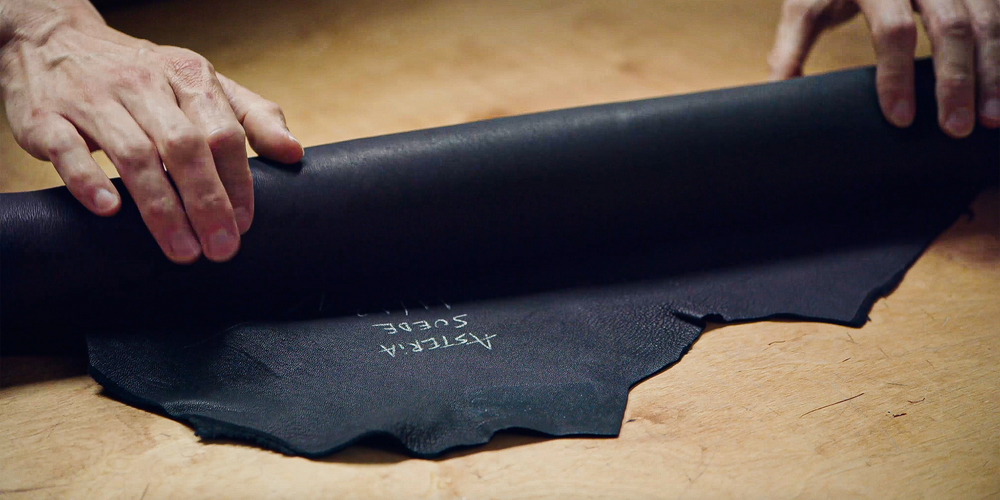
The materials. Many of the Sagan styles are made in our bespoke Asteria suede, a velvety, supple leather developed specifically for unlined shoes. It is cut from top-grain Mediterranean lambs and slowly tanned by an artisanal family-run tannery using traditional ingredients, with no chemical treatments. The result is a suede that is softer than soft to the touch, and that develops a quiet patina with wear.
The variants. From the original silhouette, we have evolved the Belgian loafer into a small family of styles, each one drawing on the same craft but answering a different moment in the wardrobe.
Across the range, the brief is the same: a Belgian loafer engineered for a modern life, made by hand, in noble materials, with the comfort built in rather than promised.

How to wear a Belgian loafer
A few principles, drawn from seventy years of the silhouette being worn well.
With a suit. Belgian loafers pair handsomely with single-breasted or double-breasted suits in the worsted and flannel range. The Sagan Grand sits particularly comfortably here, with the bridge-unlined construction giving the shoe a slightly more tailored line beneath a trouser.
With tailored trousers and a jacket. This is the silhouette's natural habitat. A Sagan Classic in chocolate or stone suede sits beautifully against grey flannel, cream cotton drill, or dark denim.
With denim. The Belgian loafer has a quiet power to lift any casual outfit. A pair of well-cut jeans, a tucked-in shirt, and a Sagan in suede or fine calf takes a Saturday look from ordinary to considered without the wearer having to think about it. There is no other slip-on in the wardrobe that dresses up casual dressing quite so naturally.
For evening. A Belgian loafer in velvet, polished calf, or precious leather is among the more elegant alternatives to a black patent dress shoe: quietly considered rather than overtly formal.
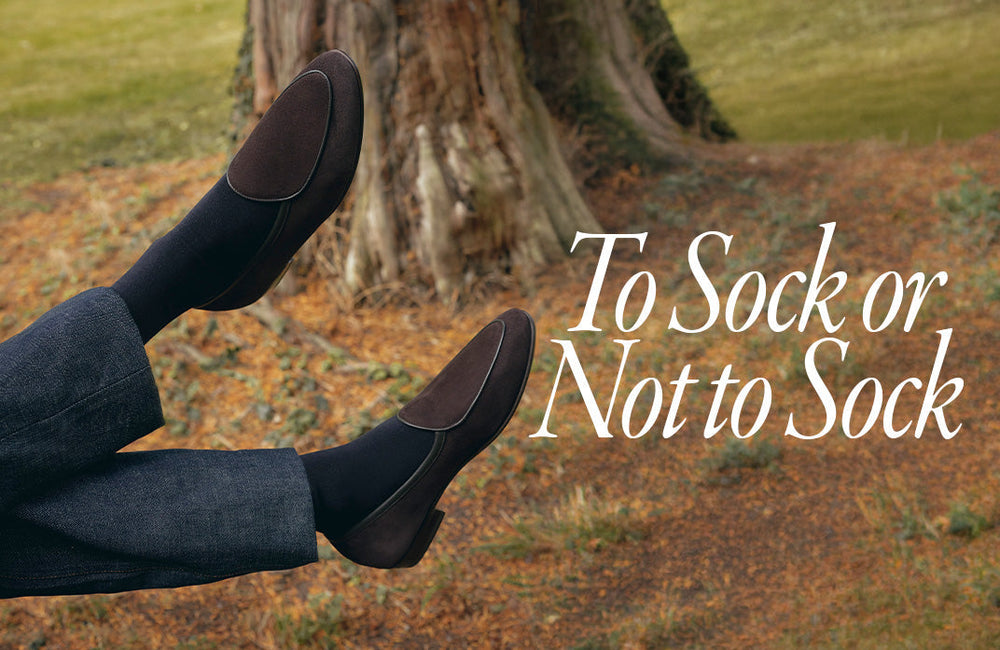
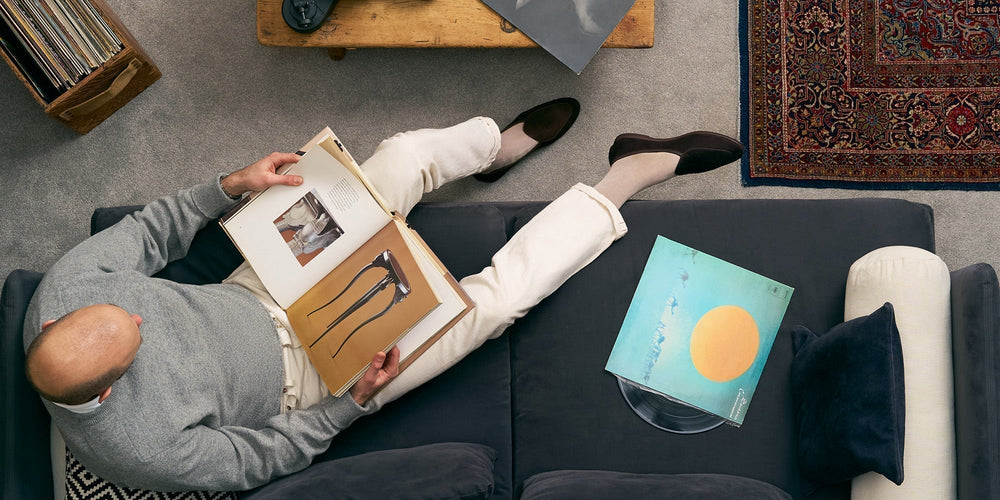
With or without socks? Both are correct, and the choice is largely seasonal. In warmer months and for relaxed daywear, a Belgian loafer worn bare-ankled, often with a discreet no-show sock to protect the lining, is entirely appropriate. In cooler months, with a suit, or in any setting that errs formal, a fine over-the-calf sock in a tone close to the trouser is the considered choice. Let the occasion lead, and err toward a sock when the setting is uncertain.
Frequently asked questions
Why are Belgian loafers so comfortable? Two reasons, both architectural. The shoe is built using the stitch-and-turn method, which places every seam inside the shoe, so there is no external stitching to press against the foot. And the upper is traditionally unlined, which allows the leather to mould to the anatomy of the wearer rather than the wearer's foot adapting to the shoe. The Sagan extends this further with a proprietary cushioned insole engineered for all-day wear.
What makes a Belgian loafer different from other loafers? The stitch-and-turn construction is the central difference. No other loafer silhouette is built by sewing the shoe inside out and then turning it. It is what produces the seamless line, the slipper-soft feel underfoot, and the absence of any breaking-in period.
Can you wear Belgian loafers with a suit? Yes, with most suits in the soft-tailored register: single-breasted worsteds, flannels, summer-weight wools. The Sagan Grand, with its bridge-unlined construction, sits particularly well with a tailored suit.
Do you wear socks with Belgian loafers? Both are correct. Without socks (or with a discreet no-show sock) is the considered choice for warmer months and relaxed tailoring. With a fine sock in a tone close to the trouser is the more formal option, and the right answer with a suit.
Are Belgian loafers good for walking? Belgian loafers are softer and more flexible than most dress shoes, which makes them well-suited to a full day on one's feet in an office or city setting. The cushioned B&L® insole in the Sagan range is engineered specifically for this kind of wear.
What is a Belgian loafer made of? Traditionally a fine suede or deerskin upper, sewn over a light leather sole, with the small bow stitched onto the vamp. At Baudoin & Lange we use a palette that includes calf, exotic leathers, velvet for evening, and our own bespoke Asteria suede, developed specifically for unlined shoes.
Are Belgian loafers formal? More formal than their slipper-like construction suggests. The unbroken silhouette and absence of visible stitching place the Belgian loafer firmly in dress-shoe territory: appropriate with a suit in the office, with tailored trousers and a jacket for dinner, and, in velvet or polished calf, with black tie. A Belgian loafer has the ability to dress up even the most casual outfits.